
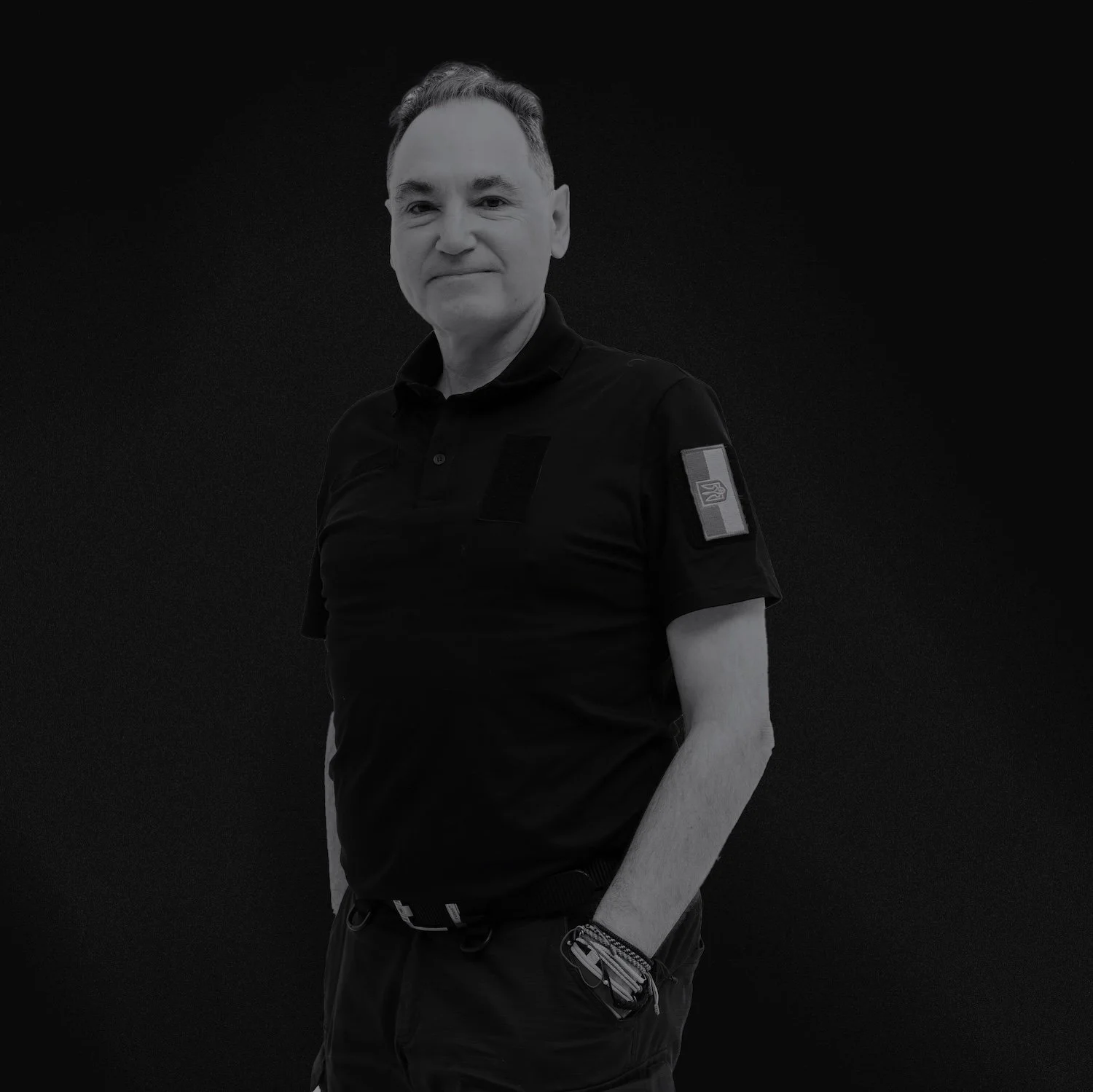
In this episode, we speak with Jordan O'Neill, founder of Advanced Research & Combat Technologies (ARCT), a UK defence technology company rethinking the foundations of modern weapons systems and ammunition.
With conventional ammunition architecture largely unchanged since 1866, ARCT is developing a new generation of inductively fired, cased-telescoped polymer munitions designed to improve weapon performance, reduce logistical complexity and unlock new possibilities across small arms, autonomous systems and artillery.
We explore how outdated ammunition architectures are limiting modern defence capability, the opportunities presented by next-generation munitions, and how integrated weapon systems, selectable effects and networked manufacturing could reshape the future of defence production and battlefield capability.
Find Out When New Episodes Get Released: https://www.millilux.io/mailing-list
Production, Design & Artwork: HIATUS ↗ The Defence Design & Communications Agency
Find Out More: https://arc-technologies.co.uk
Also By Us:












-
Transcript
00:00:01 Speaker 1
Hi, welcome to the Future Frontiers podcast from millilux.io.
00:00:05 Speaker 1
In this episode, we speak with Jordan O'Neill, founder of Advanced Research and Combat Technologies, ARCT, a UK defence technology company rethinking the foundations of modern weapons systems and ammunition.
00:00:16 Speaker 1
With conventional ammunition architecture largely unchanged since 1866,
00:00:21 Speaker 1
is developing a new generation of inductively fired case telescoped polymer munition designed to improve weapon performance, reduce logistical complexity and unlock new possibilities across small arms, autonomous systems and artillery.
00:00:33 Speaker 1
We explore how outdated ammunition architectures limiting modern defence capability, the opportunities presented by next generation munitions and how integrated weapon systems, flexible effect and networked manufacturing could reshape the future of defence production and battlefield capability.
00:01:00 Speaker 1
Hey Jordan, thank you so much for joining us on the podcast.
00:01:04 Speaker 1
I realise it's a super busy Monday afternoon for you, so to kick us off, please could you give us a really concise, like one minute introduction to yourself please?
00:01:13 Speaker 2
Yeah, of course.
00:01:13 Speaker 2
And Chris, thanks for having me on.
00:01:15 Speaker 2
I'll do my best to do a quick one minute overview.
00:01:17 Speaker 2
So my name is Jordan O'Neill.
00:01:18 Speaker 2
I'm the founder and CEO of Advanced Research and Combat Technologies.
00:01:21 Speaker 2
So we're training under Arc Technologies and we're a UK deep tech defence startup.
00:01:26 Speaker 2
At the moment, I'm splitting my time between Arc Technologies and raising pre-seed funding on there for our new ammunition and weapon systems technology and also splitting my time between working as an associate director for Ernest Young in our AI and capabilities area.
00:01:40 Speaker 2
So my role there is to kind of build latest and greatest AI technology and how I can then feed some of that into the work that I'm doing with Art Technologies, focusing on next generation of ammunition and less lethal systems.
00:01:51 Speaker 1
Brilliant stuff, mate.
00:01:52 Speaker 1
I think everyone will agree here that with the current, say, global affairs at the moment, it's such an important space to work in, given
00:02:02 Speaker 1
application of force and how that always makes news headlines, particularly my time in the BBC, it was always something that was coming up in current affairs.
00:02:10 Speaker 1
Just to kind of pivot slightly onto something slightly different, can you give us your take on Europe's rearming efforts at the moment?
00:02:17 Speaker 1
How do you see that?
00:02:19 Speaker 1
How do you see that going?
00:02:20 Speaker 2
Yeah, I think it's a really exciting time in defence at the moment.
00:02:24 Speaker 2
I think the amount of investment that we're seeing, the real focus on
00:02:28 Speaker 2
on where defence fits as part of the geopolitical spectrum has been a really interesting shift.
00:02:32 Speaker 2
I think the Klein Institute had a really good quote on this.
00:02:35 Speaker 2
Rodrigo Carroll had a quote coming out of the Klein report, #6, where he said, you know, Europe's defence buildup is historic, but money alone doesn't necessarily guarantee capabilities.
00:02:44 Speaker 2
And I think that for me is where I'm seeing a big gap at the moment.
00:02:47 Speaker 2
We're seeing a huge amount of investment.
00:02:49 Speaker 2
But we're pouring that money into legacy procurement environments.
00:02:53 Speaker 2
And I think for what we need to see on that level of innovation, bringing technology to market, some of the old ways that we've worked before in Europe, I just don't think fit in our kind of modern defense ecosystem with what's happening, the threats that we're facing.
00:03:07 Speaker 2
If you look at Ukraine now, the cycle time from when a products, when the idea comes together, where the problem statement is to actually a product being deployed, we're talking weeks.
00:03:16 Speaker 2
Historically, defense procurement's been two to four years.
00:03:19 Speaker 2
if not longer for large programs.
00:03:21 Speaker 2
And I think that for me, for the European rearmament is really where we're seeing the gap.
00:03:26 Speaker 2
It's not only that, but you've also got things like core problems around the inefficiency of the spending.
00:03:31 Speaker 2
There's a real tension at the moment in the rearmament approach where Europe has got a huge amount of money being invested.
00:03:39 Speaker 2
And I think you're seeing a rising VCs also interested in that space.
00:03:43 Speaker 2
But they've got very different priorities.
00:03:45 Speaker 2
If you look at what the VCs are looking for,
00:03:47 Speaker 2
They're looking for something where it's return investment in a short period of time, a number of years.
00:03:53 Speaker 2
Whereas if you look at the procurement cycles for governments, significantly longer and you see the investment and innovation, we're really seeing a focusing of capital in certain areas.
00:04:04 Speaker 2
Certain companies are seeming to take a large lion's share, which is really starting to, how do we bring innovation up from grassroots through DINA programmes or UKDI?
00:04:13 Speaker 2
How are we starting to engage with those
00:04:15 Speaker 2
earlier stage companies?
00:04:16 Speaker 2
And how can we start to take more bets that new technology will come through faster to market?
00:04:21 Speaker 2
And that's going to be a real challenge for the defense investment in Europe for the next few years is how do we rearm effectively?
00:04:28 Speaker 2
How do we build the capability and not just throw money into a black hole of, you know, what I think we can all agree is probably 1990 style procurement still in defense?
00:04:35 Speaker 2
How can we rethink the procurement cycle and VCs to bring that forward?
00:04:41 Speaker 1
Hundred percent, yeah.
00:04:42 Speaker 1
I mean, we saw the DIP, Defence Investment Plan, released last week.
00:04:46 Speaker 1
And actually, I must admit, as a former Marine, hearing the concept, Dan Jarvis, an ex-parachute regiment officer, talk about the hybrid Navy, actually did a bringing a wry smile to my face because I was like, it's about time, you know, we've got all this great tech going on in the background and finally it's kind of been recognised by government.
00:05:02 Speaker 1
And you know, it was a really nice moment when the DIP finally got published after a kind of a year overdue.
00:05:08 Speaker 1
But I realised then kind of time is short.
00:05:11 Speaker 1
So I was going to ask Ron to my next question and ask you like what is Arc T and how did it come to be?
00:05:17 Speaker 1
It sounds fascinating by the way.
00:05:19 Speaker 2
Thanks.
00:05:20 Speaker 2
And I think it's a.
00:05:21 Speaker 2
Funnily enough, it came across, it came together in a really unusual way.
00:05:26 Speaker 2
So a friend of mine is a, runs a robotic startup in the nuclear space.
00:05:30 Speaker 2
So he makes drones, robotics for kind of high risk environments, essentially sending unmanned systems into areas humans can't go anymore.
00:05:38 Speaker 2
We were chatting at a poker night of all things around some of the challenge of seeing in Ukraine.
00:05:42 Speaker 2
He was debating about himself taking the company towards the defense space and was talking about the challenges with fiber optic drones and how some of the jamming and area denial systems are working today.
00:05:52 Speaker 2
we're chatting about the challenges that we're seeing.
00:05:53 Speaker 2
And really, you look at some of the footage coming out of Ukraine in the last few years, and certainly with the, no one expected trench warfare to become as big as it is at the moment either, and the rise in drone technology.
00:06:04 Speaker 2
And I think we were talking around, you either see, you know, Ukrainian soldiers running around with 100-year-old shotguns trying to shoot FPV drones out the sky, or you're seeing the Ryan Metals of the world BAE systems with large-scale anti-aircraft weapons trying to take out cheap drones.
00:06:21 Speaker 2
And the economics just don't seem to work.
00:06:23 Speaker 2
So as part of a bit of a side of desk project for me, I started working on the back of that conversation, is there a middle ground?
00:06:29 Speaker 2
Is there a dedicated infantry weapon we could look at that would tackle FPV drones?
00:06:35 Speaker 2
And as part of that, I ran into some of the kind of historic legislation around the Hague Convention.
00:06:41 Speaker 2
There's a law that we can't make exploding rounds under or air burst munitions under 400 grams.
00:06:47 Speaker 2
Essentially that led me down this route of
00:06:49 Speaker 2
do we need to build something that is purpose-built for drones?
00:06:51 Speaker 2
You can't, we're going to need to build something that's a secondary weapon that is entirely dedicated to tackling the threat of drones and how would that fit in small squad tactics.
00:06:59 Speaker 2
And anyway, as I was working on the design for that, I was trying to miniaturize a number of systems and I started looking at how we miniaturize the firing side of the weapon system and how can we take some of the mechanical complexity out, which led me to a more of an electronic firing system.
00:07:13 Speaker 2
And that naturally then led to looking at the ammunition.
00:07:15 Speaker 2
How can we reduce the weight?
00:07:16 Speaker 2
How can we look at changing the way that ammunition is viewed?
00:07:19 Speaker 2
And I by chance almost stumbled across an idea for inductively fired polymer cased ammunition.
00:07:24 Speaker 2
Thought it's a really great idea.
00:07:26 Speaker 2
Wonder who's done it before.
00:07:28 Speaker 2
And then spending the next few months digging through patterns all the way back to the early 80s, looking at the advanced combat rifle program in the US through to Royal Ordnance's electronic infantry weapon program in 1997, and then back through to what we've seen recently with NDSW.
00:07:45 Speaker 2
I've not been able to find anything that was doing anything remotely similar.
00:07:48 Speaker 2
Certain elements were there.
00:07:49 Speaker 2
Certainly polymer cases have been around for a long time now and been on the clusps of technology.
00:07:53 Speaker 2
Electrically fired weapon systems again.
00:07:55 Speaker 2
If you look as far back as the early 1900s, there's been concepts around that, but it's never quite landed.
00:08:01 Speaker 2
the integration of those technologies together in a novel package was entirely new.
00:08:06 Speaker 2
So that for me, once I've realized there wasn't something out there at the moment, it really was a spark for me to say, okay, I think there could be a technology that could be redefining for what we think about small arms weapon systems, but also up to that artillery as well as we see the rise in uncrewed and autonomous systems.
00:08:22 Speaker 2
At the moment, we're kind of bolting on 1970s, 1980s weapon systems onto existing drones.
00:08:29 Speaker 2
And actually,
00:08:30 Speaker 2
Is there a way to have more dedicated systems directly built into the hardware of drones, both FPV or land systems or naval systems?
00:08:39 Speaker 2
So there's a whole plethora of different things to look at, but that's how our technologies initially came about from a chat over a late night poker game around drones in Ukraine and how we can look to challenge that.
00:08:52 Speaker 1
Real quick, if you want to hear when new episodes and articles are released,
00:08:55 Speaker 1
be sure to sign up to our newsletter at the Mililux website or find a link in the show notes below.
00:09:00 Speaker 1
But now, back to the episode.
00:09:04 Speaker 1
Brilliant.
00:09:06 Speaker 1
I did love that.
00:09:06 Speaker 1
Thank you for the honesty of it.
00:09:08 Speaker 1
I ended up rowing across the Atlantic after a few late night beers with some friends.
00:09:14 Speaker 1
So I know where, you know, these kind of like, these evenings do come and spur off some of the most.
00:09:19 Speaker 1
the best and sometimes most craziest ideas, with mates over a beer and some games, but I do appreciate it.
00:09:28 Speaker 1
There was something that struck me in, struck me about the conversation actually was, and we were talking about it a little while back, was you could increase, you could definitely increase the payload and the lingering time, the loitering time of drones and stuff, if you reduce the amount of payload, the weight of the payload on the actual system itself.
00:09:48 Speaker 1
And I was thinking you could almost feels a bit like a lean, lean manufacturing approach to defence, which are lean, lean kind of or agile.
00:09:57 Speaker 1
So I was something about 10 years ago, which was very en vogue, in terms of how do you make everything as small, as light, as near as possible.
00:10:05 Speaker 1
It got definitely got a call project management a bit excited.
00:10:13 Speaker 1
But yeah, sorry.
00:10:15 Speaker 2
No, I agree, and I can tell you from the day job of project managing kind of large-scale technology projects, Agile is still a thing and it's still going around, everyone still gets excited by it, especially in the IT space, though they do.
00:10:27 Speaker 2
Yeah, I think it just opens up.
00:10:29 Speaker 2
And the thing for me that was a real light bulb and why I think Arc Technologies was such a, was something I just had to do,
00:10:36 Speaker 2
I had a busy day job anyway in a quite an interesting area, but I think there's a number of different things converging at the same time.
00:10:43 Speaker 2
And I think now is when you see this kind of technology coming together.
00:10:47 Speaker 2
it's not just the ammunition could be lighter.
00:10:50 Speaker 2
It's not just that you can reduce, 30% of the weapons weight itself as well as the ammunition.
00:10:55 Speaker 2
So how does that fit with drones, but how does that fit for operators as well and the kind of weight burden we're seeing on soldiers and security forces and police today as well, carrying more and more equipment.
00:11:04 Speaker 2
How do we reduce that?
00:11:06 Speaker 2
But it's how do we kind of bring technology into 21st century?
00:11:09 Speaker 2
I mean, if you look at ammunition today,
00:11:12 Speaker 2
the modern cartridge was invented in 1866.
00:11:14 Speaker 2
since you had the centrified cartridge, if you looked at around from the Wild West all the way through to World War I through today, fundamentally it hasn't changed.
00:11:22 Speaker 2
And while we are seeing some changes in material science at the moment, Jeff Six Hours got a great cartridge coming out with the NGSW kind of pushing those pressures with a brass and steel hybrid, where you look at kind of steel cases and some of the alloys that are coming on.
00:11:34 Speaker 2
Some really interesting stuff there, but it's chopping and changing around the edges in my personal opinion.
00:11:40 Speaker 2
And it's not looking at the kind of sea change in how we think about ammunition technology.
00:11:45 Speaker 2
Given that ammunition is the core of all of our weapon systems, not only can we get lighter ammunition, lighter weapon systems,
00:11:52 Speaker 2
systems that are more reliable in environmentally adverse conditions because it's inductively fired, it's wireless, it's less affected by mud, dirt, grime, all of those things.
00:12:00 Speaker 2
You also can start to build in some aerospace principles around actually being able to mould the cases in a different way gives us significantly improved performance advantages.
00:12:08 Speaker 2
And it's all these things that one on its own probably doesn't justify the change, but how you combine that all together I think is going to be the opportunity to have a massive sea change to how we think about weapon systems.
00:12:19 Speaker 2
And I know we've touched on it before.
00:12:21 Speaker 2
I think the
00:12:22 Speaker 2
The way I try and explain it is it's almost like going from a petrol car to an electric car.
00:12:28 Speaker 2
Would you put an electric engine in a 1980s Ford?
00:12:32 Speaker 2
Ford?
00:12:32 Speaker 2
Probably not.
00:12:33 Speaker 2
Do you get a benefit out of it?
00:12:34 Speaker 2
Maybe.
00:12:35 Speaker 2
But are you getting the most benefit?
00:12:36 Speaker 2
No.
00:12:36 Speaker 2
And actually, if you've got this kind of technology in the sea change,
00:12:40 Speaker 2
it's really how can we take that forward in so many different different environments and make the most for the operators on the ground.
00:12:46 Speaker 1
Yeah, 100%.
00:12:47 Speaker 1
I love that outside outsider approach to defence innovation as well, because I said this on many occasions, is that those who are in defence, and especially as veterans as well, is we can kind of get a bit railroaded by the old ways of thinking, isn't how you know how do you how do you slightly evolve a system like you said that's 100 and
00:13:05 Speaker 1
what, 50 years old?
00:13:07 Speaker 1
older than that.
00:13:09 Speaker 1
If the thing is slightly more efficient, it's actually why don't you fundamentally look to redesign the thing to actually make something that gives you unlimited amount of scope for development?
00:13:22 Speaker 1
Well, I was going to ask my next question.
00:13:24 Speaker 1
So I think I can definitely understand it, but what problems does ARCT solve for defence and law enforcement then, if you don't mind me asking?
00:13:32 Speaker 2
And this is I guess has been the challenge for me as an early stage founder is not trying to boil the ocean.
00:13:38 Speaker 2
There's so many different angles that the technology can help in, from small arms systems to artillery through to uncrewed autonomous systems.
00:13:45 Speaker 2
There's so many different angles I can go in and you don't want to spend myself too thinner guessing where the technology can have its biggest initial impact.
00:13:52 Speaker 2
And for us, our kind of first product we're looking at as our beachhead for the market is actually focused on law enforcement security.
00:13:58 Speaker 2
So we're looking at the ARC 3, which essentially is a
00:14:01 Speaker 2
Pistol weapons platform that uses the new ammunition technology, and what it actually allows you to do is by combining some of the benefits of inductively fired rounds.
00:14:11 Speaker 2
and the ability to change the internal geometry of the shape.
00:14:14 Speaker 2
We're actually able to design a round that has two discrete chambers within the case.
00:14:18 Speaker 2
And Chris, you might sit there and go, why would you need 2 chambers in one case?
00:14:22 Speaker 2
Sounds like you're over-engineering something here.
00:14:24 Speaker 2
The benefit is because you're able to have the two chambers and fire either both chambers or one chamber at a set frequencies, that allows us to have a single weapons platform that can fire a round at a fully lethal velocity and with performance improvements actually gets you pushing 9 millimeter over kind of 300 meters
00:14:41 Speaker 2
per second, you're defeating level 2 body armor, all the way through to having a less lethal, I'm going to call it less lethal, velocity where you might be firing 9 millimeters, somewhere between 85 and 100 meters per second, designed to feel like you're being hit pretty hard in the chest by a heavyweight box, matching bat and round performance, those type of details.
00:14:59 Speaker 2
But it fills the capability gap, which today, police and security forces just can't.
00:15:03 Speaker 2
We've seen in the Gold is Green attack recently in the UK, police officers bring out tasers,
00:15:10 Speaker 2
30% of instances, if you look at the research around Axion and some of the tasers there, is a real challenge around people wearing thick clothing, the prongs not particularly penetrating.
00:15:20 Speaker 2
You know, you see that footage today, it's harrowing.
00:15:22 Speaker 2
You know, the terrorists got the knife running, coming towards officers, the officers are having to retreat because the tasers haven't gone through the clothing.
00:15:28 Speaker 2
If that person turned left or right and they'd be on, what do those officers do to stop them attacking a member of the public?
00:15:34 Speaker 2
So for us, this technology fills a real capability gap where tasers only operate up to 10 meters.
00:15:41 Speaker 2
Officers only really have an opportunity then for lethal firearms beyond that.
00:15:45 Speaker 2
And we want to fill that gap into a single platform, where as an officer, you can pull out a single weapon system and you've got that continuum of the decision where you can say, you know, am I at risk here?
00:15:57 Speaker 2
Does this require lethal force?
00:15:58 Speaker 2
No.
00:15:59 Speaker 2
Okay, is the individual within 10 meters?
00:16:01 Speaker 2
And ironically, we have an equivalent to a taser built within the platform as well.
00:16:05 Speaker 2
So you've got something where it's a less lethal directed energy option.
00:16:09 Speaker 2
But if beyond 10 metres, you've got this ability then to engage with a less lethal round.
00:16:14 Speaker 2
So for us, the ARC 3 and this kind of initial platform is a real beachhead where we can give officers just a capability they don't have today.
00:16:21 Speaker 2
And yeah, we're seeing it more and more with the rising terrorist attacks again.
00:16:25 Speaker 2
We had a few in the UK last year, local to me in Manchester.
00:16:28 Speaker 2
We had the attack at the synagogue recently where one of the people that was killed was unfortunately shot by an armed officer.
00:16:35 Speaker 2
It was the bullet went through the door and killed somebody behind it.
00:16:39 Speaker 2
That officer didn't have an alternative and if we can provide something that can help in those scenarios, that's our initial goal and where we think there's an opportunity to really make an impact in the market as our first product.
00:16:53 Speaker 1
So we're always interested to hear from organisations that want to contribute their thoughts to our articles.
00:16:58 Speaker 1
If this is you, send it to the e-mail newsletter to stay up to date on what we're working on.
00:17:01 Speaker 1
There's a link in the show notes.
00:17:03 Speaker 1
Otherwise, back to the episode.
00:17:07 Speaker 1
Yeah, definitely.
00:17:08 Speaker 1
We were having a conversation before the podcast as well, wasn't it?
00:17:12 Speaker 1
So as a former military police
00:17:15 Speaker 1
protection specialist.
00:17:16 Speaker 1
I remember the days of practising drawing a lethal pistol, the pistol out, and you try and get it down to 10ths, you try and shave 10ths of a second off that drawing, even to the amount of how many coins do I put in the pocket of my jacket so I can get it out of the way and pull a pistol from a what's called a pancake holster on the back of a belt.
00:17:37 Speaker 1
You know, and you literally look for every single performance improvement where you could take shave off, you know, 10ths or hundreds of a second off that.
00:17:44 Speaker 1
And so, when you think about it from that perspective, if you're if you're making the choice between a taser for a somebody who's further away versus a lethal weapon, if they obviously they get closer, they're not then obviously you start to think, well, putting the tape, re-holstering a taser and drawing a pistol in that space of time that it takes you to do that, assuming you don't fumble that everything goes to plan, that you're well drilled, you know, you're not a new officer who is still
00:18:12 Speaker 1
building up that muscle memory and that reactive nature of transitioning between weapon systems or force application systems, that somebody could have run an intent aggressor could have covered
00:18:30 Speaker 1
6, 7, 8, 9, 10 metres in that space of time that takes you to transition between the two weapon systems.
00:18:37 Speaker 1
Now, in the space of applying lethal force or any kind of force, that's the difference between life.
00:18:41 Speaker 1
That could be the difference between life and death, especially if they've got a long bladed weapon like a sword, a machete or something like that.
00:18:48 Speaker 1
You know, you could be
00:18:52 Speaker 1
having some real hard times if you're not able to, if you don't have the option to switch between 2 levels of force in the one weapon system because you're having to put the, put a different weapon system back and draw a new one.
00:19:05 Speaker 1
And when you add in stress,
00:19:07 Speaker 1
If you had, the elements in rain, you add, handshaking, you're not able to get a good grip on the holster, things like that.
00:19:17 Speaker 1
You start to add the distance that somebody can cover in that space of that reaction time.
00:19:23 Speaker 1
So I can see the benefits to this sort of stuff, this technology, intuitively.
00:19:30 Speaker 1
And I think like law enforcement would feel exactly the same.
00:19:33 Speaker 1
I think they would see this and go, we need
00:19:35 Speaker 1
this for testing, for product development, for skills development, for updating and changing our new protocols because this kind of solves that real capability gap like you mentioned.
00:19:47 Speaker 1
But do tell us a bit more about your products and your services.
00:19:50 Speaker 1
I understand you've got a platform that you're bringing to market soon.
00:19:56 Speaker 2
Yeah, so that's what we're working on from the technology perspective.
00:19:58 Speaker 2
So we're at pre-seed stage at the moment.
00:19:59 Speaker 2
So we've got, we're kind of patent pending on our technology in the UK.
00:20:03 Speaker 2
We're working with a kind of top defence IP firm enable and for that to help us and it's working with some really good starting team.
00:20:10 Speaker 2
So we've got
00:20:12 Speaker 2
few key members, I can't quite send the podcast yet for NDA reasons, but we've got a former Chief Inspector for Science and Technology at the Home Office who's engaging with us, who used to work with Axion when they first came into the UK to talk about some of the challenges there.
00:20:24 Speaker 2
We've got a kind of 25 years major from the Royal from the British Army as well, who's coming in with really good human facts operator experience to help us, as well as a former DSTL, kind of Missile Defence Centre, engineers as well coming in to help with the deep tech commercialisation side of things.
00:20:39 Speaker 2
So we've got starting to get a good team together, and Chris, I know you've been
00:20:42 Speaker 2
helping us as well from the hiatus side to kind of think about how we do our marketing positioning.
00:20:46 Speaker 2
It's been great to get your practical input as well on things.
00:20:49 Speaker 2
So products and services wise, that's this the R3 is our first beachhead go to market.
00:20:54 Speaker 2
What we're looking to do is we're raising pre-seed funding at the moment to get us from kind of initial technology design through to an actual practical demonstrator, having some good conversations with Cranfield University and their innovation hub, as well as speaking to Alan Partridge over at the Defence of Materials Excellence.
00:21:12 Speaker 2
Not at all like the Alan Parker group when you hear that name, but he's an absolutely lovely guy.
00:21:17 Speaker 2
Heads of defensive materials excellence at the Henry Royce Institute.
00:21:20 Speaker 2
But yeah, I'm sure he gets that a lot when he first speaks to people.
00:21:24 Speaker 2
But yeah, so for us, I think the products and services are we're thinking about ourselves as a defence products business first and foremost.
00:21:32 Speaker 2
The challenge we're seeing at the moment is that
00:21:35 Speaker 2
Sometimes people don't, there's a Steve Jobs quote, people don't know what they want until you show it to them.
00:21:38 Speaker 2
And I don't think people know that this technology is even feasible.
00:21:42 Speaker 2
It's not on any procurement cycle at the moment.
00:21:44 Speaker 2
Nobody's sitting there going,
00:21:45 Speaker 2
Do you know what?
00:21:46 Speaker 2
We really want to rebuild ammunition and weapon systems from the ground up from first principles and kind of using the latest and greatest technology.
00:21:52 Speaker 2
So for us, it's how can we build that?
00:21:54 Speaker 2
And it's not just the weapons capability itself that adds.
00:21:57 Speaker 2
It's what does it add to the weapon system?
00:21:59 Speaker 2
What are the capabilities that it gives operators, police forces, security forces as well?
00:22:03 Speaker 2
But there's also kind of a whole software side as well around software data.
00:22:07 Speaker 2
How can we improve things for training?
00:22:09 Speaker 2
How can we improve things for planned preventive maintenance schedules?
00:22:12 Speaker 2
There's a whole piece around manufacturing and scalability that we're looking
00:22:15 Speaker 2
can get as well, where because our ammunition actually moves from kind of standard brass and brass ammunition manufacturing, which about that is quite a quite specialized manufacturing process.
00:22:25 Speaker 2
Our systems are essentially polymer injection moulded, which is fairly ubiquitous across most developed countries.
00:22:31 Speaker 2
So again, allows you to have a much more, a much broader range of manufacturing choices.
00:22:37 Speaker 2
You don't need to have a single large plant.
00:22:38 Speaker 2
You could have a number of small plants, but you're able to then build around the manufacturing there at scale.
00:22:44 Speaker 2
So there's a few different avenues that we're looking at that comes to products and services.
00:22:47 Speaker 2
I think, watch this space.
00:22:49 Speaker 2
There's a whole range of things that we're looking at on the uncrewed systems, on the drone side of things, autonomous, how does that build together, as well as expanding out on the small arm side and looking at in the future what it means for artillery and larger munitions as well.
00:23:03 Speaker 2
There's a whole range of things there that you get benefits on around extending barrel life.
00:23:07 Speaker 2
If you think about shipping artillery barrels from
00:23:10 Speaker 2
So the front lines in Ukraine, across Europe to get them refurbished, there's a whole element there as well that we can benefit from.
00:23:16 Speaker 1
Yeah, brilliant stuff.
00:23:17 Speaker 1
And I remember our conversations about this earlier on, I was saying I was so keen to get you on the podcast to share this stuff because I always felt like a kid with a secret, you know, when I was like, this is so strategically placed that I was like, I want more people to know about this as soon as you're ready to talk about it on the
00:23:34 Speaker 1
on the part, kind of getting you on here to talk about it.
00:23:37 Speaker 1
I mean, because it covers lots of things which defence has to think about and is thinking about, and that is, the things like manufacturing ammunition in theatre, for example.
00:23:47 Speaker 1
if you can cut down the amount of time it takes to get ammunition, especially special ammunition, from the manufacturing hub in your home country across
00:23:58 Speaker 1
oceans and large land planes, into theatre and it can be produced in theatre and also as well as if it doesn't have to be produced in just one ammunition factory, it can be an
00:24:12 Speaker 1
changes if this is wrong, but 3D printed in say like multiple small manufacturing hubs is that you make strategic resilience because you're not concentrating all of your strategic assets in one place either.
00:24:25 Speaker 1
You're able to spread the risk out and therefore you make it harder for any one aggressor to hit your entire supply chain or disrupt it in some way.
00:24:34 Speaker 1
So there's this
00:24:36 Speaker 1
this does feel like a sea change because of so many layers other than the ability to change force continue in the same platform.
00:24:46 Speaker 2
I couldn't agree more, and I think it's taking away that single point of failure.
00:24:50 Speaker 2
And if you think, appreciate we're looking at the police side initially and being able to manufacture ammunition, there are definitely benefits there as well in terms of being able to manufacture in a slightly different way.
00:24:59 Speaker 2
But if you look at Ukraine, for example, there are factories today that aren't running that made dashboards for cars that are using
00:25:06 Speaker 2
molding.
00:25:08 Speaker 2
This doesn't need a sea change, it just needs you to change the molds.
00:25:11 Speaker 2
So if you can get molds to that plant and you can get the raw materials, that plant goes from making dashboards to making ammunition.
00:25:17 Speaker 2
The other thing that's quite beneficial as well is having that distributed view is that if you do need different ammunition calibers for different reasons, again, you need just a slight, you need a change of mold, not an entire change in your factory.
00:25:28 Speaker 2
And that again just opens up so many opportunities to a more, you know,
00:25:33 Speaker 2
decentralized version of manufacturing and what your opportunities are there as well.
00:25:36 Speaker 2
So it opens up a whole world of different approaches to how we even think about supply chain.
00:25:44 Speaker 2
Yeah, it's a really exciting area.
00:25:46 Speaker 2
And I think it's something that, again, today, we just don't even know it's possible.
00:25:51 Speaker 2
So it's how can we start to get out into the markets, let people know there are all these opportunities here.
00:25:56 Speaker 2
And not only do you get
00:25:58 Speaker 2
like I said earlier, lighter rounds, rounds to better performance, rounds are more reliable.
00:26:03 Speaker 2
But you also get those benefits around weapon systems and the manufacturing supply chain side as well.
00:26:08 Speaker 1
Yeah, definitely.
00:26:09 Speaker 1
I was just making a note then about, I think we definitely need to make an article about resilience defence manufacturing, you know, for the Milux website.
00:26:17 Speaker 1
So when we finally got that off the ground, we'll definitely be coming to you for some quotes to add in, add some more depth and more expertise into the article because it's
00:26:27 Speaker 1
you can imagine this will be the future of defence, especially especially from the EU level.
00:26:32 Speaker 1
If you think about it, rather than say putting oil, and the reason I say it is because I'm in Estonia right now and I read a lot in the national media about ammunition factories being produced in the country, and it's the same with the Baltic chain.
00:26:48 Speaker 1
Is it rather than say having you know one ammunition factory that is can be geolocated by
00:26:54 Speaker 1
GPS and then you send drones or any sort of smart munitions to the areas that you have them you have them just baked into the countryside.
00:27:04 Speaker 1
A bit like a bit like the nuclear weapons of the 1980s nowhere they're all kind of like scattered around the place and hidden and well camouflaged and hard to hard to find the exact the precise location of them as you can do the same with
00:27:19 Speaker 1
defence manufacturing, if you make this kind of change into it, because you're not just looking for the big concentrations of brass or, gunpowder, for example, because it's, a lot more, lot more.
00:27:33 Speaker 1
I think also, as always, it'd be it'd be remiss of me not to also highlight as well.
00:27:37 Speaker 1
I love the term beachhead market, that's what we use as an expert as well, saying my favourite metaphors for
00:27:47 Speaker 1
I know we're special on time.
00:27:49 Speaker 2
I'll probably expand on that as well for the beachhead side.
00:27:52 Speaker 2
I think it's worth knowing.
00:27:53 Speaker 2
I think for us, it's because it's because it's in terms of getting to market.
00:27:58 Speaker 2
Our goal is to try and have something where we can get user feedback in the hands of people quickly.
00:28:02 Speaker 2
And because of procurement cycles in police and law enforcement, slightly more fragmented.
00:28:06 Speaker 2
So you've got just in the UK alone, you've got a number of different police forces with different armed officers, as well as you've got National Crime Agency armed response.
00:28:14 Speaker 2
We had to have some great, some funny feedback from the head of armed armed policing when we talked about combining kind of three systems into one.
00:28:20 Speaker 2
He said there's some real interest there and he said, Joe, he doesn't want these officers turning up to scenes and then opening the boot and it looking like a scene out of the men in black, where they've got all the guns on the wall and trying to select from different weapon systems.
00:28:31 Speaker 2
And actually, some real problem for his officers is what when they get to a situation that don't know what's going to happen, how do you pick the right thing before you've got the information?
00:28:38 Speaker 2
So yeah, I think we think within police forces there's a real opportunity.
00:28:41 Speaker 2
And then if you look across the pond and we look at the US
00:28:44 Speaker 2
North America more broadly, if you think about all the different state, local law enforcement, you look at federal levels and all the acronyms you can think about there, ETF, FBI, all different ones.
00:28:54 Speaker 2
You've got so many procurement routes at different cycles as well.
00:28:57 Speaker 2
It just gives us an opportunity to try and get the systems in people's hands, get them using, getting the benefit, and starting to get our user feedback and how we can start to iterate.
00:29:04 Speaker 2
So I think, yeah, beachhead is definitely the right word.
00:29:07 Speaker 2
We've got all the
00:29:08 Speaker 2
ideas in the pipeline for broader weapon systems focused on the military defence side and drone side.
00:29:13 Speaker 2
For us, it's how can we start to get the technology making an impact.
00:29:18 Speaker 1
Yeah, for sure.
00:29:19 Speaker 1
Yeah.
00:29:19 Speaker 1
And literally when you mention about the Men in Black metaphor, then I was just thinking of the noisy cricket moment in the Will Smith of the Men in Black still works for that.
00:29:30 Speaker 1
20 years later.
00:29:31 Speaker 1
But I realize time is against us now, so I'm going to jump on to my final question.
00:29:36 Speaker 1
And also say thank you as well for joining us.
00:29:38 Speaker 1
What's the future for ARCT?
00:29:40 Speaker 1
What does it look like?
00:29:42 Speaker 2
Yeah, so I think the future for us is the near term is looking at 2 main things.
00:29:48 Speaker 2
Raising our pre-seed investment round.
00:29:50 Speaker 2
So we're kind of looking at pre-seed investment raising at the moment.
00:29:52 Speaker 2
And that is for us really to start to build out and validate the technology.
00:29:56 Speaker 2
Okay, we're a defense products business.
00:29:58 Speaker 2
We are looking at kind of procurement programs with UKPI and Dyna program, different things across Europe as well, and certainly looking at the US.
00:30:06 Speaker 2
But in honesty, this isn't something that people really know exists today.
00:30:10 Speaker 2
No one's putting a procurement request out for the whole next generation of ammunition technology.
00:30:15 Speaker 2
It isn't on the procurement cycles or in people's minds.
00:30:19 Speaker 2
And what we're actually finding is the more people we speak to,
00:30:22 Speaker 2
She's had the conversation to get it and they kind of see the direction of travel.
00:30:25 Speaker 2
It just isn't on the request.
00:30:26 Speaker 2
So for us, we're actually going more down the standard.
00:30:29 Speaker 2
And again, me coming from a slightly more technology background, going more down a startup technology cycle, I guess, looking at a pre-seed investment round, but then building in those kind of defense fundamentals, make sure it's built to the right, you know, mil-spec standards and making sure that we're getting a bench test products built, essentially something people can get into their hands by the end of pre-seed.
00:30:48 Speaker 2
So our goal, kind of the next
00:30:50 Speaker 2
18 to 24 months, ideally slightly quicker than that, is raising our pre-seed round, working through some of the challenges around getting that to a first product with our ARC 3 rounds and getting that into actual users to do some testing and starting to get our first kind of rounds of pre-orders and pre-sales in as well, looking at that.
00:31:06 Speaker 2
And then the other side is then building out our intellectual property moat.
00:31:10 Speaker 2
So what I would say is the technology itself, the ammunition is the starting point for us.
00:31:14 Speaker 2
That's our foundational bit of tech.
00:31:16 Speaker 2
That's something that makes this getting our technologies off the ground.
00:31:20 Speaker 2
What it also does is it opens up a whole world of new types of weapon systems design.
00:31:24 Speaker 2
So because you're starting out with a bullet that's so fundamentally different than what we have today.
00:31:28 Speaker 2
And it opens up a whole world of things that we can do with weapon systems that people just can't even imagine with today's versions.
00:31:35 Speaker 2
So for us, it's how do we look at when we're building the weapon systems, how can we take the latest technology from the aerospace industry, latest technology from
00:31:42 Speaker 2
automotive manufacturing on the electrical car side.
00:31:45 Speaker 2
How can we build all these different bits of cutting edge technology into a weapon system that you just can't do today with modern firearms?
00:31:53 Speaker 2
So for us, that's our kind of future of the next 18 to 24 months is getting that first, getting us from idea on a piece of paper, some of the initial testing we've done at the moment to actually products in people's hands.
00:32:07 Speaker 1
Brilliant stuff.
00:32:09 Speaker 1
I mean, it's been absolutely fascinating, and I love the concept of really bringing innovation into defence and law enforcement, because I think this stuff, your technology, your ideas are sorely needed across force application, whether that's defence or law enforcement.
00:32:26 Speaker 1
So yeah, I just wanted to say thanks again for joining us on the podcast and sharing your insights and stuff into this, and I wish you the very best.
00:32:33 Speaker 1
success for getting this getting this off the ground in the hands of the end users who will who will benefit from this.
00:32:39 Speaker 1
So, I realize you've got a call coming very soon, Jordan, to say thanks again for joining us and give up your time.
00:32:45 Speaker 2
Thank you for having me, Chris.
00:32:47 Speaker 2
Hopefully, we can come back again in a few months' time and see how things developed.
00:32:50 Speaker 1
For sure.
00:32:50 Speaker 1
It was really great talking with Jordan.
00:32:53 Speaker 1
If you want to find out more about what they're working on, check out the show notes below, and we'll see you next time.